
How to Be Different in a World that Promotes Us Fitting In with Mark Drager
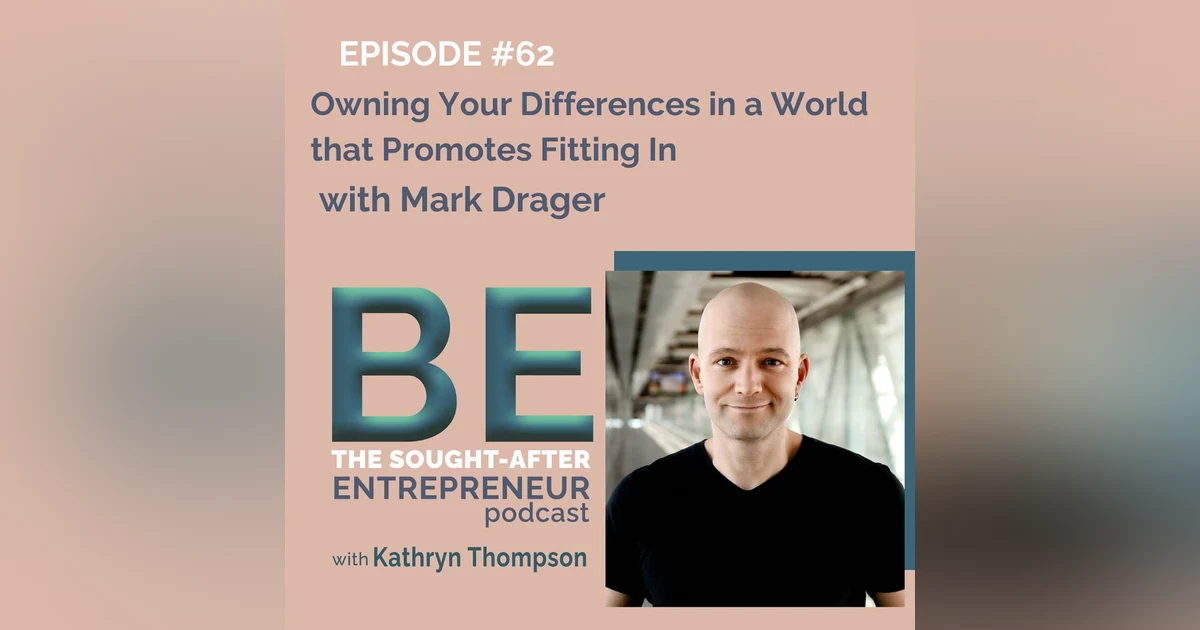


If you find it hard to own your differences in a world that promotes fitting in and following trends, this episode is for you.
Listen as Mark Drager shares how to lean into your differences to stand out.
Mark launched his creative production company Phanta Media back in 2006, grew it to a little over $2mm in revenue, and then slowly watched as it all crumbled around him. Through the hard lessons learned and working to not make the same mistakes twice, today Phanta focuses less on “keeping the machine fed” and more on doing extraordinary work with really cool people.
BY THE TIME YOU FINISH LISTENING TO TODAY’S EPISODE, YOU’LL LEARN:
- The behind-the-scenes look at what it’s really like to own your differences in a world that promotes fitting in.
- How to ensure your marketing reflects your differences and what makes you unique.
- The mistakes a lot of people make when trying to get their message seen and heard.
If this episode inspires you in some way, leave us a review on Apple Podcasts and let us know your biggest takeaway– whether it’s created those aha moments or given you food for thought on how to achieve greater success.
And while you’re here, make sure to follow us on Instagram @creativelyowned for more daily inspiration on how to effortlessly attract the most aligned clients without having to spend hours marketing your business or chasing clients. Also, make sure to tag me in your stories @creativelyowned.
Selling the Invisible: Exactly how to articulate the value of your cosmic genius even if your message transcends the typical “10k months” & “Make 6-figures” types of promises.
Free on-demand training >>> https://www.creativelyowned.co/watchnow
To apply for Elevate, an experience for coaches & consultants wanting to craft & scale their offers that sell on autopilot using attraction marketing, click here!
To find out how to own your unique edge, amplify who you truly are (& get paid for it), take your business to cosmic proportions, and have fun doing it grab it here!!
https://www.creativelyowned.com/quiz
To connect with Mark:
Kathryn Thompson 00:02
Hey, hey, I am super stoked to have mark on the show today. He's a fellow Canadian. I love connecting with other Canadians. So it's such a pleasure to have you on Mark, I'd love to just turn it over to you. So you can let our listeners know who you are, what you do and who you help.
Mark Drager 00:19
For sure, thank you so much for having me. So I am an agency owner. And I feel like that never quite does it. I mean, like so many of us in marketing or in creative industries, we say like, what do you do, I'm an agency owner. But back in 2006, I started a creative agency in Toronto, where we focus mainly on video. And I'm not sure if our listeners remember what life was like back in 2006. But video was still shot on tape. And dosh, and YouTube wasn't owned by Google, and Facebook, was just starting to be a thing where you could post photos and it was starting to come to the public Twitter didn't exist. We used to anyway, I started a video company back before the internet could handle video, cutting edge. Yeah. And, and the videos at the time were things like, since 1999, ABC Corporation has been doing but but but but but and we do that and it was so it was like corporate video. But because I went to film school and because I loved marketing. And I started to learn about all these cool things because I was working for an internet marketing franchise, and I love business. And I love that stuff. My journey was video was focused on mainly communications with big companies. And then communications became kind of marketing. And then marketing became advertising. And as the world changed, and as stuff grew, we grew our agency bigger and bigger and bigger. So in simplest terms, I'm a creative. I'm a strategist, I help you know small businesses, large international companies, and then and then personal brands really strategize who they should be what they should say how they should show up. And then because I love the world of creating, I'm also a host, I host a podcast, I host live events. So like most creatives, I do too many things.
Kathryn Thompson 02:11
I love it. I love it. And so true, I resonate with that I do all the things I often say I know our listeners equally are multi passionate, creative. So they're they're dabbling in things. Yeah, the
Mark Drager 02:22
real test is, you know, when you go through US customs, and you have to put your occupation there. It's like, what do you list like, I tried to get away with like, business owner, I just like make it as generic as possible. But then they always ask, well, what does that mean? What does that mean? What does that mean? And my wife, you know, I've been doing this for 15 years now, my wife still doesn't know how to explain to people what I do. So I feel like multi disciplinary, multi passionate, let's just own it.
Kathryn Thompson 02:45
Totally. And my husband's the same thing. He's like, I don't really get what you do. And then everyone around me kind of says the same thing. And I'm equally I That's why it's interesting. I start this, you know, podcast with, like, share with our listeners what you do, because I equally I'm like, I don't really know how to explain that sometimes. Because I have this long list of things that I do. So yeah, it's, it's, I know, our listeners will resonate with that for sure. And I'm really excited to dive in. Because, you know, you talk about helping business owners in various types of businesses really kind of stand out, and you're creative. And it's all about sort of being different and unique. And I really want to dive into this whole thing about social media. And maybe it's not even just social media, maybe it's an offline business as well. But I see it a lot in the online world where there's a lot of emulation, or the apps in general, really promote kind of the cookie cutter approach to things right, like Instagram reels. It's like put a trending song on it, and then have a dubbed over voice, and everyone's creating sort of the same videos. And so what does it take for business owners to really stand out in this day and age?
Mark Drager 03:59
Well, I'm gonna take a step back because, you know, when it comes to the tactical, yeah, you know, social medias, like weather reels are popping, you're gonna be on Tik Tok, or last summer is all about Pinterest, and then redirecting people and like, all the technical and all the tactical we can get lost in the weeds. And so many of us focus on that, we go to a conference, and they say, you need to be on this platform, and you're like, great, but you know, as a strategist, you know, that, that people are like off running to do something, and then later, they don't know, is it working? Isn't it or is it working? Is it not working? If it's not working? What should we do? What should we do differently? How do we know? And it's because we all run, and we ignore, like foundational strategy. And so if we just take a step back, like a really big step back, I often say that when we're starting something, our goal typically is just to be as good as everyone else. So So you know, let's say that I'm working with or even myself if I'm starting a new venture a new business, if I'm moving into something new I want to be just as good as company down the street, I want to be just as good as a social media page of the other people that you're following. I want to have a podcast, it's just as good as the podcasts that people are listening to. Because right now I'm starting, and I feel way below them. And so I want to be seen as just as good as everyone, right? And so you spend, and I did this, spend years working to be just as good. But if you're just as good as the established players, you're not actually giving anyone a reason to pick you. Right? Like, like, it's, that's not how it works, the established players with the established audiences, or the established credibility, or they know what they're doing, or they have their name out there, they still have the edge. And so we kind of go like, I don't get it. Like, why aren't my Why are my followers growing? Why aren't more people listening to my content? Why don't more people reading my blog? Why are my sales funnels not working? Why? Why am I not closing deals, why is my pitch not working? Because you're trying to be just as good as everyone else. And then what happens is if you survive, and most of us have to like, like, the real achievers grind through this, and we didn't survive, it took me like four years to figure this out, then suddenly, you're like, I don't want to be just as good as everyone else I want to be, I want to be better, right? I want to be unique, I want to be different I want, I want people to want to work with me, I don't want to have to like, be, you know, pitch between me and to other people. Like I want it to be so clear that you have to pick me that you have no other choice. And so we spend a ton of time trying to be totally different than everyone else. And I've seen this in my kids, you know, my, my, my kids are, I have a 13 year old and a 15 year old and I have some of you who are younger, but as a teenager, we all just want to just fit in, we just want to be like everyone else. And then you hit your 20s And you're like, oh, anything but being like everyone else, I will spend the rest of my life being different. So if we can, why not approach this by trying to leapfrog that, that just being like everyone else approach like, it takes courage, and you speak a lot on courage, but it takes courage to stand out, it takes courage to be different. It takes courage and a little bit of risk to do that. But why not start the thing. By proactively trying to leapfrog that straight to the like, I'm going to be different, I'm going to be me, I'm going to make sure that I that I'm bold, and I'm thinking really big, and I'm doing different things. And, and there are ways and we can get into strategies on how to do that. But, but that takes a tremendous amount of courage and confidence, especially when you're when you see everyone else doing something a certain way copying each other, and you're like, I'm going to do something different. But those people who do the different things, those are the people we look up to, and we love and we respect and we want to be more like so why not us? Why not? You? Why not me? Why don't we just decide that on day one, we're going to approach this next thing by trying to be different.
Kathryn Thompson 07:56
Yeah, I love that. And I love that you share that like just the whole process, right of like trying to be as good as everybody else. But as that established business owner always has that edge on us. And also that it takes like, it's that almost the growth process that it takes businesses to sort of get to that because I know, I started in the offline world spent 15 years in corporate open to brick and mortar. And then when I got into the online world, I was like, I wouldn't be as good as everybody. And I'm going to put out the content and do the thing. And then finally two years in I was like, this is boring. Because this isn't me, this isn't like I am bold, I do say things in a really direct, sometimes sarcastic way, you know, and my personality wasn't shining through. And so I love that you say you know, it, like took you four years to get to this certain point. But also that like most people either drop off because it's not really working. And they're really struggling or there's love people that like you and I that just grind through those really tough stages in business where we're kind of trying to find our way. So how do people like it does take courage to be yourself. And as you said, you know, as kids, all we want to do is fit in, and then we get to a certain point where we don't necessarily want to but we've been conditioned to like just fly under the radar or fit in. So how do people start from day one going like, I'm just going to be different?
Mark Drager 09:25
Yeah, yeah. It's, it's honestly, they say the most courageous thing you can be is yourself. It's really hard. You know, I have my own podcast, we do hard things and I'm constantly looking at like, you know, audience data and all of this stuff. And the types of conversations I want to have with the types of people I want to have, frankly, no one else is doing it the way I want to do it with the people I want to do it. And I don't know if an audience wants it. Right. Like that's the scary thing. The scary things is if I looked at the competition, who are well established well ahead of me 10 years ahead of me million people audiences went on, I could say, Well, should I just do what they're doing in a slightly better way to try and steal their audience, like, like a newer version of what everyone already is used to? And once? Well, that doesn't feel true to me, I, I want to do my thing my way. But the fear is like, what if no one wants this? Right? Like, like, what if no one wants it? And what if no one's ready for it? And what if and what if, what if, but, but, but we have to be a bit pragmatic about this. And this is where pragmatism really comes in. It's like, you have to take again, and take a step back and remove the emotion from it and say, well, like, is it better to try and be a slightly better version of the things everyone already wants? You know, or is it or, and then grind away at and spend all that time and spent all that money to make small, incremental improvements? Or is it better to very quickly, take that big swing? Do that different thing, get the data back to say, Yes, I believe it's working with small little things, believe in yourself, make it happen? Or you know, what are you know, there is no audience and no one does want it, no one's willing to pay for it. And you're charging too much? Like, isn't it better to learn that in six months, nine months a year, taking the big swing than it is to spend four or five years trying to eat away at something like, so that's the way that I look at this, that's where I continually when I'm feeling emotionally uncertain, I go back to the like, let's be really pragmatic and rational about this, I would rather take the swing, do my thing, learn what I'm going to learn, explore new areas stand out, be different, even if it doesn't work, because then I free up my mind, my creative energy, my capacity for the next swing, and the next swing and the next swing? So to answer your question, though, you know, I have a process that we've developed over the last 1012 years that we've applied to big national campaigns, you know, you're Canadian, I'm Canadian. So like, Sunwing, for example, was amazing. You know, we produce national television commercials or campaigns for Sunwing. And we worked with the Toronto Raptors, and we've done all of this stuff. And what I noticed, was like, whether we were doing a small training video, or helping launch a startup brand, or working with a big international company, it was like, we were always following the same steps. And so we've I've kind of tailored this approach now for specifically for speakers and entrepreneurs, coaches, and consultants, people who have personal brands, but it follows the same logic, it takes a few minutes to get into it, like do you want to dig into it, I do want
Kathryn Thompson 12:39
to dig into it, because I think this will really help the people. That was probably going to be my next question is like, how do you actually go about then doing that? Do you have a process and steps that you can share with people? Yeah,
Mark Drager 12:50
yeah, so so. So I call it the core three process, because every brand, in my opinion, is built on core on three core elements. There's three players, you know, I've talked to a lot of Navy SEALs, and they always say like, the enemy has a vote in how the war goes, right. Like, it's not just like you making a plan showing up. In business, the competition has a vote, the audience or the customers have a vote, and you have a vote, those are your three core elements, you who you are, what your vision is, what your goals are, who you want to become who you want to help the reasons you want to help them all of your past experiences, your voice, your your your point of view, your perspective, how quickly you want to move, all of those things make you the first core element. And I don't know about you, but as I mentioned, I've worked with hundreds of workers, with hundreds of different organizations on 1000s of different projects. And they never really know what they want.
Kathryn Thompson 13:52
Right? 100% agree with that.
Mark Drager 13:54
Right? And if I asked you what you want it, you'd be like, kind of, like, if people ask me what I want, it's like so fuzzy, it's like, I kind of have a sense, and I kind of have a feeling and I think this is good, but how do I know if it's good. And so so the first step of the process is to really follow these three key points. You want to be able to discover as much about you as possible, and this can take a few days could take a few weeks, click few months, you might land on it, it might change, but you want to discover as much as possible as all of those things that I quickly listed off, you know, again, experiences and perspectives and, and all of those things, why you're doing what you're doing, what fires you up, what lights you up, who do you want to help all of those things. So discover everything, distill them to the things that matter for this venture. Because I can have parts of myself or my hobby or what have you that don't matter for this specific project, this specific venture this specific thing. So you want to distill that. And then you want to define line in words, the words you're going to use, like, like, what is your voice? What is your vision? What are your goals? Like you want to define that. And once you know, all of those things, we have the first core element done, you have you and the reason why I say this is important because I've, I've spoken to people who go, like, I just gonna be me, you know, like me, or hate me, I'm gonna be me. And if you like me, you're gonna follow me. And if you hate me, go after yourself or whatever. And I'm like, Okay, that's cool. But I always, I always asked people with that point of view this, let's say that you're gonna go to a wedding, you're all dressed up, you're in the church, you're looking at your grandparents, you're looking at the bride, you're looking at all these people, are you going to show up as you're going to be you, but you're going to show up as a certain version of you. Now, let's flash forward five days earlier, and it's like, you know, the stag night or the, you know, the bachelorette party or something?
Mark Drager 16:04
You, you're still showing up as you, but it's probably a different version of you than the one on Saturday morning at the church. Right. You know, like, like, if this was a Hollywood movie, you know, people would be doing blow off of like strippers, stomachs and stuff, right? Like, you know, people don't usually do that. But and then you're not going to be showing up to the church with your grandparents swearing left, right? And center. Right, like, still you different versions of you. Yeah. So So we have now just discovered all the things that make us us. And we've been able to distill down the things that matter for this Project Venture, what have you, and then we've defined what, what version of us needs to show up. But the next core element is the customer, the audience, the prospect, what have you, I mean, they have a say in it. Right? Totally. And so I love to use this example. Like, again, we all think fuzzy thinking, Who do you want to help? I was working with a client who wanted to target want to target mothers, like, Oh, cool. But motherhood is a rich tapestry of different people in in different ways. So So let's just take motherhood, and this is again, off the top my head. If you are an unmarried teenage mother, how is that different than if you are a second, third, fourth time mother in your 30s versus a single mother, versus a first time mother in your 40s, who's a working mom who wants to get back to work versus high income, or low income, versus maybe the type of mother who, who feels that guilt and shame because she feels detached from her child, versus the one who just felt like her whole life, she was waiting to be like, think about all these different types of mothers. And so often people go like, well, the person making the purchasing decision in the household is the female from 30 to 40 years old. But, but like, there are so many different versions of us. And so people go like, this is where your personas come into account. And if we had Mary mother, and we had, you know, Fred, father, and we had, you know, Sally sister, it's like, they're, they're not real people. They're just these weird averages of data and stuff that we, again, let's be pragmatic, we take a lot of comfort in. Yeah, we figured it out. And we did it and it's working. And then it's like, but it's not working. Because we're not being specific enough. So what you want to do is you want to really, again, take all the stuff that you define for your goals. And you want to only look at the people, the types of people or the audiences that actually matter for you achieving that goal, let's be really specific, really, really specific. And then what you want to do is you want to know everything you can about these people. So you're gonna find out like, like, who not only who are they in what their ages and what have you, but then you want to find out like, what type of content do they love, and you're gonna go to that content, you're gonna go to the comments section, and you're gonna start reading the comments, and you're gonna start looking for things that people say you're gonna go to Reddit, and you're gonna start reading Reddit, you're gonna go to the Atlantic, you know, or Vox or whatever, and you're gonna start looking at articles on what editorial stuff is happening. And, you know, we had a client who had had a,
Mark Drager 19:32
a detangling hairbrush. Now, I'm wearing a hat right now, but if you can see me, you know that I'm bald. So what does like you know, a 39 year old white bald dude know about being able to talk to women about detangling hair brushes, but we follow the same steps. And we discovered that, you know, within certain communities within African American communities, what does what, what is the value of hair culturally within your community and how has Oprah Winfrey These hairstylist created this, this level of frizziness versus, versus curly hair spectrum. So if you're a four A versus a four, B versus a five, what does that mean? And how long on average do women spend on their hair? Like, we could find out all this stuff? Totally. And so what you want to do is you want to, you want to only focus on one audience? Yes, the primary audience, right? Because the goal is to is to make sure you show up looking the right way, saying the right things. And so you want to learn everything you can about your audience. And I just gave you I mean, we have advanced tools that we've invested like six figures in, that gives us some pretty cool stuff. Yeah, we're tracking 250 million Americans on a billion devices with a trillion data touch points. But I gave you a whole bunch of ways you can do this without spending a single dollar. Yeah. So learn everything you can about your audience. So now we have two elements, two core elements, you and your audience. The third is the market or the competition. And we don't want to again, try to be just as good as everyone else. We want to stand out. Yeah. So what is your competition doing? And you can use like these Intel tools, the spy tools and things like that. But let's get really basic, like, go to their website, and then wait to see if on Instagram On Facebook, on YouTube or whatnot, you get remarketing ads. If you get remarketing ads, what are their messages? What are their colors? What do they look like? Does it look like they spent a lot of money on design or not go to their YouTube channel, see if they have a podcast like just see what they're doing and what they're investing money in. And a great hack is if they are advertising on Facebook, go to Facebook, go down to page transparency on their page, click on trade page transparency, because everybody on Facebook, you have to be able to show which ads they're showing. And then you can look at their ads. And you can look at how long they've been running those ads. And if they've been running those ads for months and months and months, and you see this wall of ads, and it's all the same message or the same look or the same field, they're doing the same thing for months and months and months, it must be working. Otherwise, they wouldn't be spending all this money on it. Yeah. So like this is, again, this isn't hard. But what you're going to want to do is just, you know, you're going to sign up for their email newsletters, you're just going to collect all of this stuff. Because we want to discover, and then we want to distill what matters to us. And then we want to define the core elements that matter. And so we now have three things, we know what we want. Yes, that's where most people don't even start an end. We know what our audience wants. Cool, that defines how we need to show up. But the third thing with our competition is we can either look to see if we can beat them at their own game. And if we can't, if we can't out spend, if we can't go back in time, 10 years, if we can't steal their audience, then we need to be different. And once you have if you imagined a Venn diagram of three circles, you the customer and the end, and then the competitors, where those three circles overlap. That is what makes you unique, because it's true to you. It's what your audience wants, it's what your competition isn't doing. And now you can develop positioning, or copy or a look or feel, or a logo or photography or sales pages, or your new book, or your keynote presentation or your pitch or your podcast or whatever, you can create something that just reveals itself to you as like, Oh, this is what I need to do. Okay, cool. And then you try it, and then you test and then you see how it's working and all of that stuff. But that is the core three process that we have used. Like, frankly, I haven't done, I haven't done the math, but I know that you know, we've done like $13 million in creative content. Amazing. And I can tell you that we keep using this process over and over and over and over again. And so I don't know at what point in like kind of our revenue journey we like really honed in on it, but we have used this process to produce millions and millions of dollars of content for the biggest and the smallest of brands. And so I can just tell you, it works.
Kathryn Thompson 24:21
Yeah, that's what I was gonna ask you, you know, because I know that the people that listen to this podcast range, right? They can be big, big businesses or small and so I love that you you touched on that that it does work. Do you feel like people just don't spend the time to actually really do this work because I feel like when you share this, I'm like, this is brilliant and absolutely love it. And you know, I worked in agencies prior to starting my online business and so I so get this whole piece of it and I wonder, Do people just not spend the time to really get to the nitty-gritty of it, are they too quick to want to jump to the next thing.
Mark Drager 25:03
Yes, 100%. But I would honestly say that too, people are too quick to want things to work without trying hard enough. Yeah, you know, I have a friend Philip Stutz who, who has in his book, and I know, but John Assaraf says this, and a lot of people say this, but the idea is, are you interested or committed? Yes. And if you're interested in growing your business, or launching a podcast, or starting something, or whatever, if you're interested, then then you're kind of just gonna kind of flirt with it. Yeah. And you're gonna hit the point. This is me, a lot of times, I'm interested in a lot of things. I have ADHD, I'm creative, as I mentioned, like I'm interested in and then, but you hit the point where you feel like you're always flirting with greatness, but you're never, you're never capturing it. You're never like, you're never, it's never paying off. You're bouncing from thing to thing to thing to thing. And so not only do most people ignore how important this is, but most people are kind of just okay with mediocrity. You know, if, if you go to my Instagram account, considering that, that I have 15 years, and I own a multimillion dollar agency, all this, like my Instagram account is embarrassing. It's embarrassing ly bad. And, and it's because I did not choose to invest the team or the structure takes for me to hit the level I want to hit. And I'm kind of inconsistent on the social side. And so I've never received results. So I have two options, right? Like, I can go like, How come I've been putting, you know, over two and a half years, I only have 2600 subscribers on Instagram or followers on Instagram, and I should have more in blah, blah, blah. Or I can go like, well, what would it take? And so, you know, we've been, I've just onboarded three new full time members, like I have five full time team members who are working on my content and social, which, to me, seems kind of bananas. Yeah. But I also know I spent two and a half years kind of mucking about without really any real results. And so in January, when I sat down with my, with my clo, I said, Listen, like, like, if we need this to make this work, if we need to be present, and to have great content and great quality and hit in a consistency, you got to stop waiting for me, that's never gonna happen. So we come back to that pragmatic approach of like, well, I want outcome, I need to make investment, I need to have people and systems and teams and processes. And I hate all of that stuff I hate, like I hate all of that, building it and meeting after meeting of like, how it should work. And then here's the steps. And it just seems so complicated. And it's like, but you know, I am committed to this. So, so really, those who are committed, you have two options, you don't have to do what I said, then you have to learn through testing, right? Make make make make make, always be making content, always be releasing content, always looking at your KPIs and tweaking things. And you will, you will find all of the stuff that I just went mentioned, through testing and looking at what works. Or you can if you don't want to spend all of that time and all of that money kind of making mistakes in front of people or putting money into advertising that doesn't work or analyzing or what have you, then you come and work with me or with you or with people who are strategists to help you do that foundational strategy. Most people aren't willing to be on either end of that poll, like they're not committed enough to create test and see what works the Gary Vee approach. Yeah. And they're not sure that they want to spend, you know, the money or the time it takes to work with someone like me or you or what have you. Or the other approach, they would rather just stay in the middle, and then kind of bitch and moan when nothing pays off. Frankly,
Kathryn Thompson 28:42
yeah, yeah. And it's so interesting, because you touched on again, like some really great things of like, just even owning the fact that, you know, you had like the systems and the processes and all that is like the stuff that you like the show you just don't even like, but you know that it's the things you need, in order to start to see the outcome. Because, again, I know so many creatives are following this multi passionate people that are just like, I just want to show up and do what I do. And I just don't wanna have to worry about all of the other back end stuff. But it does require consistency, and maybe you're not the one being consistent. You have a team being consistent for you. Which is huge, right? Because it's like, yeah, we as entrepreneurs and creators, we just want to do the things that we love to do. And then you add in all the other stuff about running a business and all of that and it's like, what I didn't sign up for this. So, but yeah, and the interesting part of it is like it's it is it interesting. Are you actually really truly committing to committed to making it work and that, like you said, two years monkeying around I know I've spent lots of time just mucking around on stuff. Um, but I know I'm equally committed to making it happen and, and do and doing the work. So you talked about the ups, you know, that piece of the thing that like people don't even really maybe even start with or want or whatever. So. And I know a lot of my clients will say to me, they often say, Well, I think this is what's going to work for my audience, or I see that nobody else is really doing this. And I'm like, but is this the thing you want to do? Like, is this actually what you want? Are you just doing it to make money? Right? So how do you get to that core of like, this is the thing I'm really passionate about?
Mark Drager 30:37
So there's nothing wrong with doing something just to make money? If Yeah, we're all if we're all honest about it. Yeah. You know, I mentioned the kind of 13 million in content that we've created. Yeah, millions and millions of dollars of that is stuff that no one wants to watch. Yeah, right. Like, and I if I sit down with a big corporate client, and I say, Hey, are we doing this project? Because we want the audience to watch this. Love this, engage with it? Are we doing this because we need SVP of whatever to see that we're doing something and go like, check. We did our job. Yeah. Okay with either one. But let's, let's just be honest, like, don't give me the most corporate structured, boring worst environment possible, but then somehow expect the most engaging, amazing, awesome thing. Like Let's call a spade a spade, if we're doing this to check a box. Yeah, cool with that. That's fine. So so like, let's let's be clear. If a client comes to you and says, you know, I will, or if even yourself, you're like, listen, I like, like, I'm running out of runway, I need to inject some cash into this business. I need to do X Y Zed to do it. Awesome. I mean, there's there's literally nothing wrong with that. Yeah, it's when we try to make something do something we don't like, this is never gonna work too many customers, or too many target audiences for a message trying to have one thing, do all of these different objectives. Try to, you know, I gotta make money. I gotta make money. I gotta make money. And not having any passion or soul into it. If you're trying to make money off of you. Yeah, right. So like, if you approach business, I have a friend who approaches business. So totally different than me. Yeah, he is an m&a guy. He's in mergers and acquisitions. Yeah. And so he like looks at the balance sheet. And he looks at the leadership structure. And he looks at the processes and looks at the people and he looks at the, you know, the cost, cost of acquisition for lead gen and what he could do to fix it. And who's the sales team? And what are they converting? And that business doesn't need a leader with passion? Yeah. Because they have all the people, the systems, the processes, the brand, they have everything else and, and that's cool. They make money. I don't know if Coca Cola needs, you know, the CEO, to be like, crazy passionate about, like, finding their passion, like they just, they need to really love business. Yeah. So but if you are the type of entrepreneur or person like me, or maybe like you were where we are owner-operators are we're in it, or it's like an expression of who we are, what we stand for what we're who we're hoping to help, the impact we're looking to make. Well, then, yeah, it better be true to you. And I wish that I had an answer where I could say like, it's a, b, and c. But it's in fact, more like therapy. Yeah. Which is this discovery process. You know, like, I'm a huge fan of the Enneagram. Have you ever heard of the Enneagram? I love it. Yeah. So I got into the Enneagram, like 10 years ago, when none of the books were written. But you know, and I love Suzanne's to build and I live in Corona, and they wrote the road back to you and all this stuff. And I got read. I'm like, really got into it. But I, I got into it when there was only a textbook. And I'm like, reading this textbook. But the Enneagram does, do all of our listeners know who the Enneagram is?
Kathryn Thompson 33:51
I'm sure, will they? I'm sure they do. I talked about human design a lot I talked about. Yeah. So they I'm sure. And if they don't they do now. But yes.
Mark Drager 34:00
So the Enneagram is a personality profile that's based on the idea that there's nine different profiles, each with it with an ingrained fear. And because we have a different fear, we're going to do different things. We're gonna move in different ways. We're going to take different actions, we're going to think in different ways and react in different ways. Because we have an ingrained fear. I'd be interested in what your Enneagram number is, but yeah, the reason I bring it up is if you did a Myers Briggs at work or a DISC profile at work, they are, you know, there's all kinds of issues with these personality profiles. But, but you can do the profile, and I can be identified as an intp, which is what I am, and it's pretty accurate, like, like, I am an intp. We argue whether that matters or not, but it's accurate. Yeah. Enneagram has something like a 60 to 70% fail rate on the online tests, because it's not the type of thing that you can just take 20 minutes and do a test and go like, Oh, I'm a three with a two wing or I'm an eight with a seven wing like because it's, it's based off on motivation. Yep. On internal fears and the stories and it's the type of thing where these tests are these books will help you figure out kind of directionally where you are. But often, you know, a one, you know, a one and an eight might be confused for one another, because both of them are in the anger triad. And both of them might be Go, go, go, go go. And from the outside, they look the same, but they have very different motivations. You know, the one that perfectionist just wants to make sure they're doing things the right way. And the eight, you know, the commander just wants to like blast through everything and make it happen. Yeah. So you know. So it's like that finding your purpose and your mission and the part of your brand. And this is part of the reason why our process takes 12 weeks. Yeah, it's not because we couldn't move through it faster. It's because if I didn't give people specific, like, say challenges, but exercises, and allow for reflection, and exercise and reflection, and exercise and reflection, if we didn't do this, we would be building an entire brand, or an entire approach or an entire strategy on like, like, what they felt like that day.
Kathryn Thompson 36:17
Yeah, in the moment. And again, I love that you say, I can't give you this step by step. I'm glad you said that. Because I often say that's my clients, when they asked me like, you know, how do I get to my purpose? Or how do I really know what my passion is? Or how do I know? And I'm always like, I can't, I can't do that for you. You have to do the work for yourself. And the reflection piece is huge, giving yourself the space to actually reflect I'm a seven in the unigram Ah,
Mark Drager 36:42
there you go. I could have guessed seven with a wing or six wing.
Kathryn Thompson 36:46
I don't know I have to go back and look because I've gone such down the rabbit hole with human design and Gene keys lately that I'm so into that right now. But I'm, I have to go back and look and let you know, but I'm just I have a seven. It's funny, I was on another podcast with a woman and she's like, you're a seven? I guarantee you and I was like, yes, you know that. What's yours?
Mark Drager 37:05
I'm a six with a five wing i Okay. So that's the loyalist that, you know, I and this is, this is the problem with these personality profiles. I'm a huge fan of the author, Benjamin Hardy, who wrote personalities and permanent and who, not how and, and he has a new book coming out, and I had him on my podcast, but part of what, what we all want is we want the personality profile to be like, This is me. Yeah. And it's like, great, it gives you understanding, but then we also go like, well, you know, I, I couldn't, I couldn't possibly go do this, because I'm a, I'm a whatever I'm a, I'm a three, you don't understand being a three is so hard, because I have to show up and, and I'm gonna you know, I'm an achiever, and I you know, I live in the shame triad, like, like, so we wrap our victimhood in it. And so, so what I know is like, I'm an intp, that means I'm introverted, which means I'm process driven. I connect all these dots, I live way up in the clouds. I'm a six with a five wing. So it's like, like, I never quite sure if every time I come to a definitive answer, I play devil's advocate, and I challenge my own thinking, and I talk myself out of things. I'm never sure of anything. I'm living in constant fear. I have GA D, which is anxiety, I have generalized anxiety disorder. So like, and I'm a five wing, which means I'm always energy focused. And I'm like, I'm just so tired. And it's like, I have been told by people, they're like, Mark, it's amazing that you were even an entrepreneur. I don't think I've ever met anyone with your things, who was an entrepreneur? So this is why it's like, the benefit of knowing who you are is like, great. Now, how can I change? And how can I be better? And how can I not let these stories hold me back? But at the same time, it's just like, dang, I wish it wasn't so like, yeah, just wish I was in eighth unit. Like, I wouldn't be as vulnerable. Everyone loves me for my vulnerability and how open I am. Because I'm six. And my wife marvels at the fact that like I can, I can, like read the room and like, bring people together, because I just want us all to get along. Yeah. But yeah, what's your husband? Your seven, he must be like, I don't remember one.
Kathryn Thompson 39:20
It's interesting, because he's an electrical engineer. So these tests for him. I know these tests for him every time I'm like, I plugged in his human design, and we're both manifesting generators. But it's interesting, because anytime I do these tests, like even the Myers Briggs, he's like, I'm going to try and hack it. I'm just going to try and get different answers every time I'm like, Of course you are because you're an INTJ then probably Oh 100% Like he's a
Mark Drager 39:44
computer sensitive.
Kathryn Thompson 39:46
I wouldn't say I wouldn't say that. No, I wouldn't say that. He is but I also think he like can really shut off the emotion. Like I Yes, she probably is like he can very much He's like, Why do you care about that so much. And I'm like, cuz I'm so emotional because I'm an odd depending on when I take the test, I'm an INFP or an E and F p, depending when I take the test I can get I'm like a 5050 split on that. But so he's always like, Why do you take it? So personally, I'm like, because it's emotional. And he sounds like an INTJ. And he has a computer brain so I wouldn't I Yeah, I'm sure he is. But and he's also like, I'm not taking these, these don't work. Like I can hack it and stuff like that. So yeah, for
Mark Drager 40:32
me, it's either a five or probably an eight because eights move to five, right? Like eight, okay, I've been in times of stress. And, or he might be a five because fives moved eight. And so this is again, where it's like it's hard to class someone else or what have you or even take? Yes. Because, because there's a lot of overlap. And, and at the end of the day, we're all people, we all experience a whole range of emotions, and we all share those range of emotions. But yeah, anyway, yeah, I love
Kathryn Thompson 40:59
Yeah, yeah. So and that's true and in, in saying that, like, you can take these, and it can be a tendency for us to look at, like what we can't do because of them. And I know human design. Like they often say, like, it's not about putting you in a box. This is not about you being in a box, it's about taking what it is. And then you could do whatever you want, right? So it's like, you know, people said to you, like, I can't believe you're an entrepreneur, but it's like, well, I'm not going to let this task or this result, limit what I do, but it's a nice reflection of what I could you know, who I am and what I am at the core.
Mark Drager 41:36
Yeah, you touch on two things that are kind of core to me, my thinking, my philosophy, but, but also what I bring to all my work. You know, the greatest question you can ask yourself all day, every day forever, is what do you want? Yeah. Because once you know what you want, you have clarity, because anything else that takes you away from what you want is, frankly, it's a distraction. It's going to hold you back. It's, it's, it's not helping you. So what do you want? And then the next question that I love to ask is, who do you need to be? Like, who do you need to be to get what you want? And if we're talking about brand, if we're talking about entrepreneurship, if we're talking about health? If we're talking about relationships, you know, like, I want to be an amazing dad. So what do I want? I want to be an amazing dad, who do I need to be an amazing dad for my kids? You know, like, what do they need? How do I need to show up? What do I need to say? What do I need to bring? And often again, we bumped into like, it shouldn't be this hard. Like it shouldn't. My wife is, my wife is a coach, like a coach at Orangetheory fitness. Yeah. And, you know, if it's a Sunday morning at 7am, and she's coaching a class, you better believe, not only is the class not full, but people aren't really bringing the energy. And she'll go like sugar, like, just not getting the energy from the group. And go, who do you need to be like, it's your job, to bring the energy. It's your job to create the environment, it's your job to fire people up. If you're a speaker, and you're walking on stage, and it's crickets. And you're like, you know, the audience just or you're a comedian, and you walk out there, and you're like, the audience, you know, they just weren't engaged or you're a podcaster. And your guest isn't like clicking with you. You like, it's so easy for us to, for my wife to blame the members, for the comedian to blame the audience for me to say like, why did you book this, this guests like, they're just not giving me the energy? And who do we need to be? Right? It's our job to bring it and it's our job to act a certain way or say a certain thing. And again, this is when it comes back to like, like, it still needs to be authentically you. Otherwise, you'll find yourself constantly ping-ponging between who you think you need to be for others. And we fall into that trap all the time. I want you to know who you are, I want you to know what you want. And then I want you to ask, Who do I need to be to get that? And again, there's this there's, there's this skill spectrum, people will say, Well, you know, on the extreme all you're gonna do this for everyone. It's like, no, like, like, let's not play that game. Let's just be real and say, like, what version of me needs to show up? And who do I need to be? How do I make that happen?
Kathryn Thompson 44:27
Yeah, so beautiful. So beautiful, because I hear that so often is like, it shouldn't be this hard. Or I'm putting out this stuff and people aren't engaging and people aren't interacting, and people aren't this and people aren't that and it's so easy to look outside of ourselves and blame that outside result or lack of results and be upset with the audience or be and not want to show up. But at the end of the day, it boils down to us as personal brands, like who do we need to be in order to I get the engagement from our audience or have those two way conversations with them right? At the end of the day, they're just people on the other end of the screen or whatever, right? And it's like, we're sitting in our house passed off that no one's talking to us or whatever. It's like, well, why what energy are we bringing? That's having that result? Right?
Mark Drager 45:20
Yeah, you know, when I get intimidated by people, because I get to speak to some pretty big, pretty cool people. Yeah. You know, the old line, like, we all put our pants on one leg at a time or whatever. Like, I, for me, what I use is like, unless if you're like, the President, what I think of is like, we all got to stop for red lights. Yeah, like, like you can, you can, you can be really important. And maybe you have a driver or a shirt or whatever, but, but at the end of the day, you're still sitting there at a red light, waiting to make your left turn. No matter how big you are, no matter how fancy you are, no matter how much money you make, and you're just sitting there waiting, like everyone else, you know, like, there are certain things where I just like, you know, if I walked into a barbecue, a backyard barbecue, let's say that was happening. And there's 30 or 40 people there. And I walk in with my family and my kids, and I'm getting introduced to people, I might see someone, you know, let's say this, like, amazing, you know, all put together middle aged woman, I see her and I'm talking to her. And it's like, oh, cool. It's this is Linda. And hey, Linda, how's it going? And then how are your kids? And then later, this has happened to me before later? Yeah. You're the CEO of what? Or I was at an event at a Tony Robbins event with my friend Evan Carmichael, we're sitting in the front row, because of me, because Evan knows them. And I'm doing this acting exercise where we're supposed to do three rounds of with a partner of getting increasingly angry with them. Oh, my God. And so this person is like, starting off by being like, I'm so angry with you. And then Tony Robbins was free it up kind of thing. And then he brings it up, and he brings it. And finally by the last day, just like this, his eyes are seething and he's spitting fire. And he's inches from me, and I'm feeling so incredibly uncomfortable. And then Tony Robbins is like, great. And then the guy just like drops the mask. And he's like, oh, man, how's it going? I'm like, yeah. And so I'm doing these exercises. Well, guess what? I find out that he's an actor. He has a Netflix series. He works with Spike Jones, like, like, he has a million plus followers and like, Oh, my God, this guy's a big deal. And it's like, yeah, no, I'm working with this kind of crazy looking dude with red hair, who's kind of smaller or whatever. And we're working through this person. And I find out it's Shawn white. Oh, my God, like the Olympic snowboarder like Yeah, and I'm busy telling him about my childhood fears. It's like, so. So I've been in these situations where it's like, I didn't even know you were that important. Yeah, I didn't even know that people love you this much. So when I meet people that I do love, or I'm geeking or fanning out on, I just tried to get back to that stage of like, they have to wait at a red light. If I didn't know that they were important, they would just act totally cool and chill anyway. And for me, I try to bring that version of me to the things as well.
Kathryn Thompson 48:05
Yeah. Which is so you know, that, that that that authentic self, right, you're just showing up as you doesn't matter who's in the room, whether it's the President of the United States, or it Shawn white or Tony Robbins. And it's like, I'm showing up exactly as I am. Or I'm in a backyard barbecue talking to somebody that we're meeting for the first time. And yeah,
Mark Drager 48:27
I got Tony Robbins because I was able to do like these like, press photo things where we all wait in line and we get like 30 seconds with him. Yeah. And any and the person whispers in his ear, and they're just like, because they would, they would say who they are. They're like for my friend, Evan Carmichael. This is Evan Carmichael. You've worked with him too for years. 3.4 million followers on YouTube. And it's like, oh, yeah, how's it going? And then they whisper in his ear. Like, this is the guy who came with Evan Carmichael. And I'm just like, and I'm like, Hey, Tony. And he like big guy. Like shaking your hand. I was like, Listen, man. I'm cool. I love you. I just love this event. It's amazing. And he's like, trying to like, make small talk. And I'm like, Listen, man, you don't have to do that. That's cool. Like you got a big lineup behind you. Yeah, I get it. Anyway, let's move on.
Kathryn Thompson 49:10
That's so awesome. I love that they're whispering in his ear. But yeah, like how is he supposed to like, yeah, he's not remembering who everybody is and all of that. So yeah, so amazing. Well, it's been such a pleasure having you on I know our audience is gonna love this. Is there anything else you want to share before we wrap up?
Mark Drager 49:29
Just figure out what you want, like life would be so much easier. If you could just at the same Tony Robbins event. I was working with someone. And it was a clarity moment for me. He was like, Mark, you don't know what you want? Not all I do. It's just it's like, you don't know what you want man. And then when he said that I realized like in my business with my team hiring next steps who I need to be all I realized I keep bumping into again into that like, oh, maybe I'm not so great at goal setting. Maybe I'm not so great at clarifying the specifics of what I want. And I've learned that the more I practice this, and the more I do it, the easier everything becomes. Because we don't have enough time to do everything. We don't have enough budget to do everything. But as soon as you define what you want, you can stop wasting time. And you can let go of the emotional shame and guilt and baggage of like, you know, if I want to be a really great dad and a really fantastic husband, and that's what I want. I can't be working 90 hours a week. Totally. I just can't. And so it's like, well, yeah, but I want that. And I also want to make $20 million. Okay, that doesn't sound like it's achievable. Yes. How are you going to do it? And who do you need to be? And how do you need to think so? So the last thing I'll just always leave people with is like, what do you want? is the most important question you can ask yourself.
Kathryn Thompson 50:54
Yeah. And that's going to be the path to ultimately achieving it. And can you look at the, you know, the 20 million, what does it need to take to I need to work the 90 hours because I'm not gonna be able to be a good husband or father or what wife or whatever. So brilliant. Where can people find you if they want to connect with you?
Mark Drager 51:15
Head over to IG. My handle is @ MarkDrager. That's drager. You can DM me, I don't have a bot. I don't have a VA It is me. You can DM me, if you want to check out the podcast, we do hard things. You can head over to YouTube or any of your podcast areas. If you want to check out the agency, it's fanta.com. That's ph anta.com.
Kathryn Thompson 51:38
Brilliant, and we will link all of those up in the show notes so you guys can just click on those again. It's been such a pleasure to have you on Mark. I know they're gonna love this one. Thank you, Katherine.